FEATURED POST: WHAT IT TAKES TO TEACH STUDENTS TO BE STRONG WRITERS by Meg Kinlaw

This week our featured post comes from educator Meg Kinlaw, a curriculum developer for Wit & Wisdom. Meg previously taught middle and high school students and served as an English language arts consultant with the Tennessee Department of Education.

ORIGINAL POST DATE: DEC 10, 2021

SOURCE:https://www.literacyworldwide.org/blog/literacy-now/2021/12/11/what-it-takes-to-teach-students-to-be-strong-writers

Many parents and caregivers look at their children’s math homework and say it looks nothing like the math they learned as kids. Today, students use more strategies to solve problems and focus on conceptual understanding of math rather than just relying on memorization and tricks. But what appears to be less obvious to parents is that literacy instruction has evolved dramatically too—particularly when it comes to how we teach writing.


INTEGRATING READING AND WRITING

I remember, not too fondly, one writing assignment I gave my students in which I asked them to write about the most disgusting thing that happened to them. It led to giggles and students were paying attention that day. But were they learning much to support their success in school and beyond? Not really.

I’ve since come to understand that good writing instruction should integrate reading and writing, connecting writing assignments to great books, articles, and texts students are assigned to read. For example, in schools I’ve worked with in recent years, students in third grade study oceans and read related books and other texts, including works of art. The students learn about one of my favorite woodblock paintings, “Under the Wave off Kanagawa,” by Katsushika Hokusai, and read about Jacques Cousteau and giant squids. At the end of the unit, students work on a writing assignment in which they explain why humans explore the sea. The students have so much to say and write.

By connecting an engaging writing assignment like that to high-quality reading material, students work on their writing skills—such as sentence structure, vocabulary, and grammar—and they also build knowledge on worthwhile subjects.

If you are interested in learning more about rethinking writing instruction, we recommend checking out our ILA Intensives hosted by Steve Graham, the 2021 recipient of the ILA William S. Gray Citation of Merit. There are two separate Intensives, one for educators who teach students 4 to 8 years old and the second for educators who teach students 9 to 12 years old.

I also love a fourth-grade lesson in which teachers ask students to write about what makes a literal and figurative “great heart” after assigning them to read the scientific book all and other texts about Clara Barton, the nurse who founded the American Red Cross. Students learn about biology, anatomy, and an important figure in American history while developing their writing skills at the same time.

NO MORE BLANK STARES

This approach is very different from the writing prompts I used earlier in my career that were based only on the students’ personal experiences. Those might have included assignments like, “Write about what you did this weekend” or “Write about a memorable moment in your life.”

The truth is, when I asked those kinds of questions, I often got panicked stares. Many students would say they didn’t have anything to write about. This was especially true for students who felt their home lives weren’t as colorful or interesting as that of their peers. This raised concerns about equity and whether we were ensuring all voices were heard in the classroom.

I started to shift my instruction when Tennessee adopted new college and career standards about a decade ago. The standards showed me the value of connecting reading and writing assignments. Now, thankfully, classroom resources and practices are catching up with the standards, and we’re seeing much more robust literacy instruction across the grades in our schools.

STEPS YOU CAN TAKE

So, if you’re an educator, explore how curating rich texts around a meaningful knowledge-building topic will support all students in becoming stronger writers. Consider moving away from having students draw on their own experiences as writing topics and toward offering equitable access to shared knowledge. You will be amazed at the insightful writing your students will create.

Encourage parents to look at the assignments coming home and consider whether they look like the writing tasks of their school days. Hopefully, they’ll say they are different and better. The homework should encourage students to engage with great books and build their knowledge on important topics, all while developing strong writing skills.

Students have been through a lot this past year and a half, particularly when it comes to educational disruptions. But if we keep making progress in the English language arts classroom, I’m confident we can help young people develop the skills and knowledge to be great readers and writers. That’s something to feel thankful for as we settle into this school year—and beyond.

Essence Reviews: Wildwood by Colin Meloy

In Colin Meloy’s novel Wildwood, an ordinary life becomes extraordinary for Prue McKeel and Curtis Mehlberg. Prue’s baby brother, Mac, is kidnapped by a murder of crows under her watch, and she absolutely must bring him home. When her classmate Curtis learns what happened, he insists on helping her.

The murder of crows have taken Mac into what locals call the Impassable Wilderness, a dense and tangled forest that no one on the outside should be able to cross through. Prue and Curtis, however, do so with ease. When they become separated, bigger questions begin to loom: What is Wildwood? How were they able to pass through so easily? What are the Dowager Governess Alexandra’s true intentions? 

Themes of grief, desire to belong, friendship, trust, yearning, and honor are deftly woven throughout this novel and shown through its many human and animal characters’ responses to the obstacles they face. No character in this novel is ever painted to be purely perfect or evil. There is room for fear, sadness, and other human emotions. 

Wildwood is the first in a series. I am curious to see how this will continue and how it ends for everyone. Colin Meloy’s nature writing is wonderful to relax in after a long day. The chapter structure, with alternating scenes between Curtis and Prue, works well. Overall, this was a satisfying read.


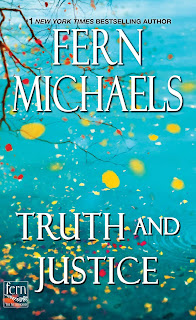
Essence Reviews: Truth and Justice by Fern Michaels

People in love do amazing, and sometimes drastic, things for one another and for themselves. In Fern Michaels’ women’s fiction novel Truth and Justice, readers see just how much love people have for each other.

Bella Ames Nolan has not heard from her husband, Major Andrew “Andy” Nolan since he was deployed to Afghanistan and wonders if he was truly the love of her life. On the day Bella signs the divorce papers, she finds out that Andy died of injuries sustained in Afghanistan, and that she has not, and will not receive spousal benefits because Andy neglected to file the proper paperwork that would have made Bella power of attorney.

Bella decides to make a move to North Carolina, and thus move her eggs from her local fertility clinic. To her shock, Bella finds out that her eggs were moved. However, Bella claims that she did not move her eggs from the fertility clinic. Enter the Sisterhood: a top-notch, close-knit group of women from all walks of life who get the job done. Soon, aliases are uncovered, accounts are hacked into, and someone close to Andy is taken in.


A novel full of turns and twists, Truth and Justice kept me glued to my seat and intrigued to find out if the culprit was who I thought it would be from the beginning. I enjoyed Ms. Michaels’ writing and characterization. This is the second women’s fiction book I have read while an intern at Literacy Connections. While women’s fiction is still outside my wheelhouse, I enjoyed this novel.

Essence Reviews: The Seasons of My Mother by Marcia Gay Harden


No one wants to lose the person they love and admire, no matter the circumstance. Marcia Gay Harden’s memoir, The Seasons of My Mother, moves readers through Ms. Harden’s journey as a daughter, actress, and mother through the lens of her own mother, Beverly’s, diagnosis and progression of Alzheimer’s disease.

The memoir’s anchor is the philosophy of ikebana, the Japanese art of flower arrangement as an expression but interspersed throughout are stories of family, grandparents and great-grandparents. I was intrigued by the life and relationship that Ms. Harden has first with her mother, and then the relationship she has with her own children. Ultimately, the story is about holding onto one’s dignity and pride in the midst of declining health and disease. Alzheimer’s disease affects 47 million people worldwide. At the time of the memoir’s publication. Ms. Harden goes through her own struggles and rewards, as her mother Beverly is consistently by her side, celebrating or commiserating every one.

As I read, this memoir felt less about declining health and Alzheimer’s disease--readers see more mention of this towards the end of the book--but more of a tribute to a life and legacy of a powerful, devoted woman who decided to use ikebana to create an identity beyond a Navy officer’s wife. I believe that that is what the deceased, no matter what they die from, want: a celebration of their lives, not one of mourning. To that end, Marcia Gay Harden’s memoir has accomplished its mission.

Essence Reviews: Between Shades of Gray by Ruta Sepetys


A popular social media quote goes, “Holding on to anger is like drinking poison and expecting the other person to die.” In Ruta Sepetys’ young adult historical fiction novel Between Shades of Gray, Lithuanian deportees labeled “thieves and prostitutes” during World War II must decide if the anger and fear they have towards the NKVD--the Soviet secret police--will kill them or strengthen their resolve to fight another minute.

Fifteen year old Lina Vilkas is a superb artist; her drawings were supposed to take her to study with famous artists in Europe. But in June of 1941, her family and others were deported from their Kaunas, Lithuania homes and taken by cattle car through Belarus, Russia, Siberia, stopping at labor camps in Altai before crossing the Arctic Circle to Trofimovsk, the North Pole.

During this harrowing journey, the deportees are subjected to cruelty that Sepetys describes without adornment. They also experience kindnesses from one another, usually at the risk of their own lives: giving each other their own rations, stealing from the NKVD. They even celebrate Christmas together. All have a common goal: to go home and be reunited with loved ones.


Between Shades of Gray explores empathy toward our fellow man and the risk to our own lives if we choose love. Ruta Sepetys’ novel is well-written and it made me think about how our society still utilizes fear, anger, and silence. 

Essence Reviews: Back On Blossom Street by Debbie Macomber


The best communities can be expansive or they can be small. What is most important is that they are cohesive. Debbie Macomber’s novel Back on Blossom Street is a women’s fiction novel that takes an entire street--the titular Blossom Street--and peoples it with complex characters that kept me curious about their lives beyond the last page. Ms. Macomber’s characters immediately pull the reader into the world of Blossom Street. Even if a reader, such as myself, has never encountered Blossom Street before the reader is not left wondering about characters’ previous stories.


On Blossom Street, there is A Good Yarn; a knitting shop run by Lydia Goetz. This is the anchor of the community and where the majority of the story takes place. A Good Yarn hosts knitting classes, and this is where an unlikely cast of characters meet: Colette Blake, a widow who is running from her past; Alix Townsend, who has severe pre-wedding jitters that are not just related to marrying the love of her life; and Susannah Nelson, owner of Susannah’s Garden (next door to A Good Yarn). All characters have to come to realize that they must forgive the people that hurt them--and, in turn, forgive themselves for what they did in the past.

Debbie Macomber’s Back on Blossom Street is a novel that is outside of my typical things to read. Nevertheless, I enjoyed this novel and the journeys that all characters undergo to heal, forgive, and honor one another.


The Unstoppable Essence


I spent the better part of this spring and summer trying to find work and was getting a lot of calls for interviews, but no call that said that I was hired. I did not know anyone in Goldsboro or Wayne County I could network with, but I did have a connection to Vocational Rehabilitation and job coaching because of disabilities I have.

I paid a visit to Literacy Connections even before Vocational Rehabilitation became involved with getting me an internship at this literacy center because I was interested in being a volunteer. I have always had an interest in books, literature, and literacy, especially having worked at a literature and literacy agency in New Jersey, where I am originally from. 

At Literacy Connections, I learned about the Separation of Duties, where duties involving money are separated to ensure that no theft occurs. I also learned how to use the Goodwill system to price donations. I wrote book reviews for the Missy Reads blog to promote the Little Free Library at the Literacy Connections office on Ash Street and helped organize the Little Free Library at the GWTA Transfer Station on N. Carolina Street here in Goldsboro.

The most important thing I have learned as a potential employee with disabilities is how to communicate. Ms. Suzie Acree, and her staff have been nothing but generous to my needs and accommodations. What really helped me open up about my dreams, goals, and needs were the Reflective Journalings that I did at the end of every workday. As I continue my professional life, this is something that I will take with me because it is a good way to unwind from the workday. It is because of these Reflective Journalings, in conjunction with working with my Employment Specialist, that I realized that I want to pursue a career in social work and advocacy for people like myself.

Being able to make a difference, no matter how small, is always something that has been important to me, and I feel that I have done that at Literacy Connections. I have found my purpose in life, and I am certain that it is because of their help. 

I once again thank Literacy Connections of Wayne County for giving me the opportunity to intern with them this fall. I am very appreciative to have had this opportunity.

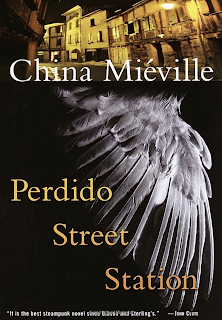
Essence Reviews: Perdido Street Station by China Miéville


Perdido Street Station by China MiĂ©ville is a steampunk novel that takes place in the world of New Crobuzon, which is beneath an ancient, dead beast’s towering ribs. When I stopped reading, Issac and Lin started their unique journeys. Issac is about to attempt to construct wings for a Garuda, a half-bird, half-human creature, named Yagharek, who has come to him for help from the Cymek. 

Lin and Issac’s relationship would be frowned upon in New Crobuzon if people knew about it. Issac is a human and Lin is a khepri. Khepri are not despised as they once were, but there are people and creatures alike who do have prejudices against khepri. Issac seems to be enamored with Lin for who she is, and he can be possessive. However, he does not want to be seen in public with her, and this is a source of contention for Lin, who is unashamed of who she is and what she does. She is proud of her rebellion, whereas Issac is quiet about his. He wants to keep it that way so he can continue to be in the “in-crowd.”

Lin, a self-exiled artist, has been commissioned to create an artwork for a creature only known to her as Mr. Motley. Mr. Motley found Lin through several drug suppliers and was highly impressed with her work. 


Perdido Street Station is populated by a diverse cast of people and creatures. MiĂ©ville has created an entire system in this novel and needs all the pages to tell the story. It is a good selection for fans of Charles Dickens, Neal Stephenson, and Franz Kafka, of whom this book is “reminiscent” (from the back cover flap). 

Essence Reviews: The Kill Room by Jeffery Deaver


What could you do with a “million-dollar bullet”? In Jeffery Deaver’s thriller/suspense novel The Kill Room, lead forensic investigators Lincoln Rhyme and Amelia Sachs attempt to answer just that question. 

In the Bahamas, an expatriate of the United States who was last seen in New York has been assassinated by a sniper. Bahamian authorities are reluctant to cooperate, having their tourist interests in mind. Shreve Metzger, head of National Intelligence and Operations Service (NIOS) is a vigilante whose office’s mission is to eliminate terrorists and anti-Americans. But a whistleblower who signed their note off with the name “A person with a conscience” from New York brings in the NYPD. Rhyme, Sachs, and NYPD officers must race against time as prime people who last saw or interacted with the deceased begin to disappear. 

As the crime story unfolds, a plot thread about perceived ability undercurrents. Rhyme is a quadriplegic and uses a motorized wheelchair. A minor but still significant point of the novel is that Rhyme is due to have surgery to give him use of his right hand. Throughout the book, we see another character deal with chronic pain that impacts their work in the field, and could result in them being permanently desked if they don’t take action soon. 

Reading this novel was out of my traditional wheelhouse. It was a fast-paced, edge-of-your-seat read, good through the final word. 
TAKE A BOOK ~ SHARE A BOOK
This book and many more can be found at The Little Free Library.

GET TO KNOW A CONTRIBUTOR: Essence B Scott


Essence B. Scott is an intern at Literacy Connections of Wayne County. Born and raised in Mercer County, New Jersey, she moved to Goldsboro, North Carolina from Gaston in February 2021. Essence is a writer with disabilities and has found creative writing helpful to process challenging times in her life. She has an Associates degree from Mercer County Community College and is eager to pursue a Bachelors degree in Social Work. 

Essence Reviews: Mad Dash by Patricia Gaffney


Patricia Gaffney’s novel Mad Dash is a novel whose message is “What is at the heart of all things?” That is the question the main characters, Andrew and Dash Bateman, have to answer. 

When Dash and Andrew find an abandoned dog on their doorstep, Dash is more than excited to keep it, love, and nurture it. Andrew, not so much. He is allergic to all dogs but his own: Hobbes, an ancient [insert breed here] that used to be his father’s. Dash is unhappy in her marriage to Andrew of twenty years. From the faculty parties at Mason-Dixon College that Andrew does not take part in, to Dash’s mother’s death, to their daughter, Chloe, going away to college, there have been little things that have been pecking at this marriage. 

But this seemingly dead dog is the last of many straws for Dash, who abruptly leaves and heads to the cabin in Virginia. Here, both Andrew and Dash begin to reevaluate what they mean to one another with the help of other characters. For Dash, these take the form of Greta, an eccentric new hire for Dash’s photography business; Maureen (“Mo”), Dash’s best friend who has sworn off monogamy after the dissolution of her marriage; the Benders, Shevlin and Cottie, who help maintain the cabin and surrounding land where Dash stays, and Owen Roby, a farmhand. For Andrew, these characters are Elizabeth O’Neal, an all-black wearing, feminist professor; Tim, a colleague and friend; and Wolfie, a neighborhood child. Together, along with a marriage counselor, Dr. Fogelman, these characters make Andrew and Dash, respectively, confront issues of partnership and what it means to work together.

When Andrew becomes very ill, the Batemans must make a decision: will they stay together and pull through, or will they come apart and ultimately get a divorce?

Told through alternating points of view with a strong cast of supporting characters, this novel is sure to please. 

TAKE A BOOK ~ SHARE A BOOK 
This book and many more can be found at The Little Free Library.


Featured Writer: Essence B. Scott                              (Literacy Connections Intern) Essence uses writing as a way to process her youth and adolescence, and wants to inspire others with disabilities to become self-sufficient, strong advocates for themselves and others. 

POSTS TO ENJOY

Procrastibaking: In the Kitchen with Julie (in Partnership with Literacy Connections)

Enjoy our first Thanksgiving special celebrating Literacy Connections and all things cookbook! https://www.procrastibakingpodcast.com/podcas...