WELCOME TO YOUR CREATIVE NOOK! Grab a cup of coffee, or tea, and pull up a comfy chair. This is an open space of sharing your creative self, through unlimited learning and literacy. Interested contributors are encouraged to join. Simply e-mail me using the DEAR MISSY feature below. New content will be posted every Thursday. Keep in touch! - Missy -
Essence Reviews: The Kill Room by Jeffery Deaver
GET TO KNOW A CONTRIBUTOR: Essence B Scott
Essence Reviews: Mad Dash by Patricia Gaffney
We Are The World
A Year Of Reading The World with Ann Morgan
SOURCE: https://www.ted.com/talks/ann_morgan_my_year_reading_a_book_from_every_country_in_the_world?referrer=playlist-talks_for_lifelong_readers#t-524597
ANN MORGAN set an ambitious goal: to read one book from every country in the world over the course of a year. Now she's urging other Anglophiles to read translated works so that publishers will work harder to bring foreign literary gems back to their shores.
FEATURED POST: The Freedom of Literacy by TRENÈE CHIMÈRE LURRY
SOURCE:https://www.literacyworldwide.org/blog/literacy-now/2021/08/05/the-freedom-of-literacy
ORIGINAL POST DATE: AUGUST 2021
This post comes to us from Trenèe Chimère Lurry, a special education teacher.
Literacy opens the door and opportunity to freedom—to engage in a world separate from the one in which you reside. If you allow yourself to enter, your options are endless. Frederick Douglass said, “Once you learn to read, you will be forever free.” Literacy offers that opportunity. It opens a door to freedom that can be conceived only once it is obtained.
However, lacking in this ability connects to a prison of the mind, a prison that holds many of our Black and Brown children hostage, and a prison that can prevent all students from experiencing the joy that we know literacy can bring to their lives.
TEACHING TO DREAM
Finding the joy in literacy requires the ability to dream. We know our students come with many different needs and differences. But the ability to dream should be afforded to everyone regardless of skill level or ability. A dream is a cherished ambition, aspiration, or ideal.
As educators, we must believe for our students what they sometimes do not believe for themselves. Your dreams for your students’ achievements and expectations go hand in hand and can open the door for a reality that can supersede your greatest expectations. Having great aspirations for your students will increase their desire to reach them.
Research has proven that high expectations improve performance. What you believe about your students can be a motivating factor in or a deterrent to their progress. You may see scores you don’t like or a curriculum that does not support your aspirations for your students. But I urge you: Do not allow your eyes or your present reality to deter your dreams. Believe what can be. Help your students by allowing them the freedom to dream. Let the dreams that you have become the goals that you set. Communicate the dreams you have about your students to them so they know you believe. Make your dreams visible so students can see them. Display vision boards so students can connect with what you envision.
Help make dreams become reality. Push for necessary changes to curriculum. Do not let policies stifle the possibilities that are endless when dreams and high expectations collide.
TIME FOR CHANGE
I can speak confidently because of my special education background. I have seen students find their joy in literacy. For eight years, I was immersed in it. I taught high school life skills. My struggle daily was having to use a reading program that lacked both a focus on phonemic awareness and texts that were grade-level appropriate. Students’ reading levels were between first and fourth grade but their ages were 14–21.
Once my district found a program that concentrated on phonics, as well as grade-level culturally responsive texts with diverse representation and relevant topics, dreams became realities. I saw Lexile levels soar 30 to 50 points in three months. Confidence that I never saw before in the eyes of my students appeared, and I saw the doors of opportunity and possibility open, and areas of darkness become lightened.
Opportunities were on the horizon for my students. That same possibility can exist for more students if we just begin to shift the narrative and change our perspective. I never stopped dreaming no matter what my reality was. Because of that, I firmly believe that all students can walk in freedom and the joy of literacy.
This week we celebrate Maria’s ambitious journey to aim higher, gain independence, and achieve success in her career field through her work with her tutor, Dawn, to make her dreams come true.
Maria had some training with the English language during high school and college but did not have a lot of English-speaking experience. She started in a beginner English class at Wayne Community College and quickly moved to a more advanced class. Her teacher spoke to Maria of aiming higher and using her education to achieve her career goals. She started taking Cisco classes and was referred as an intern to Literacy Connections to help improve her English language skills and to gain work experience. After a few weeks, she was learning a new computer system, trying to perfect her speech but wanted more. The staff worked with Maria to connect her with a tutor.
Dawn, an experienced IT Director, had recently left the corporate world and was looking for a way to contribute to her community. Google and her love of reading lead her to Literacy Connections. Seeing the similarities in their educational background the staff thought it would be a perfect match. They started working together by just talking about their lives and getting to know each other while Dawn corrected pronunciation. They moved on to conjugating verbs, vocabulary lists, and grammar. As Maria’s confidence grew, they worked on resumes, job applications, interview skills, and studying for the driver license test.
In late summer 2018, she got a job as a waitress at a local restaurant. She credits her employment to Literacy Connections as she had to speak English to all the customers and wouldn’t have been comfortable otherwise. Maria waitressed for a year while still studying for her Cisco certification and saving money to buy a car. In August of 2019, she obtained a position as an IT intern working 24 hours a week. She was able to leave the waitressing job and concentrate more fully on her Cisco education.
After working as an intern for seven months, she finally got the call from her dream employer, Cisco. She aced the interview and was hired. Due to the pandemic, she hasn’t been able to work in the office in Raleigh yet but works remotely from home. She speaks English for nine hours a day and loves every second of it. Maria says she wouldn’t have been able to achieve her ultimate goal without those months at Literacy Connections with her tutor.
Now, more than ever, our community needs us, and we need Friends like you!
Visit www.literacyconnectionsofwaynecounty.org
Open the door for individuals like Maria.
Seven Things I Wish People Knew About Parenting Kids With Dyslexia by Kristin Kane
Source: https://www.understood.org/en/community-events/blogs/what-i-wish-id-known-sooner/2017/03/28/7-things-i-wish-people-knew-about-parenting-kids-with-dyslexiaOriginal
Original Post Date: March 2017
As a mom of two kids with dyslexia (and other learning differences)—and as a person with dyslexia myself—there’s a lot I’ve learned over the years.
I’ve learned how to advocate for my kids. I now understand how to best work with their teachers. And I sometimes even have answers for those tricky questions about dyslexia that once stumped me. I’m truly no longer a newbie.
Despite what I now know, however, I still sometimes feel misunderstood as a parent. There are times when I don’t want to have to explain what dyslexia is or what my kids need. But I still do explain, both to school staff and to other parents.
Here are seven things I wish people understood about what it’s like to parent children with dyslexia.
My kids have to work twice as hard just to stay afloat in school.
For kids with dyslexia, reading is exhausting, writing is laborious, and spelling is downright torture. Each of these skills is required in every subject my kids have at school. Homework can take two or three times longer to complete than it does for other kids. Yet they tackle it day in and day out! I wish people understood how hard my kids work every day just to keep up.
My kids have strengths that don’t show up in school.
Our society has a very particular idea of what success is supposed to look like in the classroom. Kids are often graded by how fast they read, or by how many sight words they can spit out. Sadly, these are the areas where kids with dyslexia, like mine, struggle. And while they may read slowly, they have other strengths. For example, my daughter has an awesome ability to see something, describe it, and break it down in her mind. But in school, there’s often no measure of that skill. She doesn’t get the same opportunity as other kids to shine and be recognized for her visual strengths.
They feel different from their peers every day.
Just having an can make a child feel different. But it’s the day-to-day struggles that really remind my kids how having dyslexia sets them apart. Can you imagine watching an entire classroom finish an exam and realizing you’re only halfway through? Or getting only a third of the way through a reading assignment before a group discussion begins in class? These constant reminders of their reading issues weigh on my kids daily.
It’s frustrating when teachers have little knowledge about dyslexia.
Every year before school starts, I meet with my kids’ teachers. We discuss their special education services and learning differences. Between my two children, I’ve had this meeting nearly a dozen times. I’m thankful for the opportunity. But sometimes it’s exasperating. There are teachers who have very little knowledge of learning differences like dyslexia. I wish educators had better training about how to teach children with dyslexia. And I wish they better understood how dyslexia affects kids in every aspect of their school day.
My biggest job is to be an advocate for my kids.
We all have roles in life. I like to tell people that “my kids are my job.” If I seem overly focused on how they’re doing and not paying attention to other things, well, that’s my life’s work. I take my role as a member of the IEP team seriously. I’m an equal, contributing partner to my kids’ educational plan, and I’m there to help make decisions about what’s appropriate for them. I’m eager to share what I have learned and observed about my children with school staff. I don’t just want them to meet their basic needs. I want to help them strive for their highest potential.
It was heartbreaking to watch my kids struggle at such a young age.
As parents, we all want the best for our children. We want to see them be successful. We want them to feel the happiness that comes with achievement. I know life will eventually bring struggles to my kids, as it does for everyone. But I hadn’t expected those life struggles to start in first grade with learning to read. There are days when my heart is sad as I watch my children labor over a life skill like reading that others seem to have mastered with ease.
My kids are the bravest people I know.
Even for adults, it’s tough to speak up and draw attention to yourself when things are challenging. You have to know yourself very well and know how to put your strengths and needs into words others can understand. That’s tough for anyone. Now imagine how hard it is for kids. Self-advocating takes a lot of courage. Nothing makes me prouder than hearing my children speak up for their needs. They understand the impact of dyslexia on their schoolwork and assignments. They want to level the playing field for themselves. They know that with their IEPs, that’s their right. They have the courage to change an environment that may work just fine for other kids, but that needs to be tweaked for them. That’s real bravery.
FEATURED POST: Family Engagement During Remote Instruction of Students with Deaf-blindness and Multiple Disabilities by Sarah Steele and Julianne Lemman
This weeks featured post comes to us from Sarah Steele, a classroom teacher for students who are DeafBlind at the Texas School for the Blind and Visually Impaired. She is passionate for family engagement and Social Emotional Learning for the field of DeafBlind education. Joining her is Julianne Lemman, also a classroom teacher at the Texas School for the Blind and Visually Impaired, where she teaches students with multiple disabilities, including students who are DeafBlind.
Source:https://www.pathstoliteracy.org/blog/family-engagement-during-remote-instruction-students-deafblindness-and-multiple-disabilities
Original Post Date: September 2020
During the last six months of online instruction, we have found that finding ways to support families of students with multiple disabilities or deaf-blindness is the key to success.
A LITERACY JOURNEY: Brittany's Story
Literacy Connections recognizes our programs often work best when we partner with other organizations working toward similar goals. The partnership between the Bank On Wayne program and Habitat for Humanity clearly illustrates that it does indeed take a village! This is how the journey of prospective Habitat homeowner, Brittany, brought her to Literacy Connections.
A long time renter, Brittany dreamed of owning her own home and investing in her future with real assets. With only her income to depend on, she knew this was a lofty goal, so in 2018 she filled out an application for Habitat for Humanity. Initially, she was denied because her debt-to-income ratio was too high. Not to be deterred, Brittany found another stream of income and addressed the problem. She reapplied in 2019, and SUCCESS! This time she made the cut. All prospective Habitat homeowners must complete eight hours of financial education through Bank on Wayne as part of their required sweat equity. Brittany signed up and enthusiastically participated in the classes, eager to learn about budgeting for home maintenance, as well as new strategies to add to her existing budgeting skills.Shortly after completing Bank On Wayne, Brittany’s brand new home was completed. Her home was dedicated on June 11, 2020, and she proudly received her keys. Recently, the new homeowner stopped by the center to provide an update on how she is using her newly acquired skills. She is saving each month to create an emergency fund and making decisions on home maintenance, such as paying someone to mow her lawn or investing in a lawnmower. She no longer has a landlord to call. It’s all on her.
She also mentioned employing some of the energy savings tips discussed, such as setting the thermostat at a consistent temperature and not leaving lights or the TV on when not in use. Even though her new home is energy efficient, every little bit helps.As expected, Brittany is eager to fill her new home, but she is careful to plan her purchases and avoid impulse buys. She learned from Bank On Wayne that before making a purchase, she should consider the cost of the item and divide by her hourly wage to calculate the number of hours of work needed to buy the item.
Sometimes, the purchase is just not worth it. Brittany said the most useful thing she learned was the importance of tracking her daily spending, even the small, seemingly insignificant things. This really allows her to see where her hard-earned money goes and to make changes if needed. Brittany also talked about the importance of having a built-in pause to prevent her from impulse purchases. So, what’s her pause? Call Mom!Brittany said she would recommend Bank On Wayne to anyone hoping to purchase a home, not just participants in Habitat for Humanity.
This self-sufficient, hardworking, young lady’s journey is just beginning as she works to build a future of financial stability. Next up for Brittany is her four year degree in Human Resource Management.
Friends like you open the door for people like Brittany.
Visit www.literacyconnectionsofwaynecounty.org
Together we are building a literacy rich community.
FEATURED POST: THE LETTER A by Darren Sardelli
The letter A is awesome!
It simply is the best.
Without an A, you could not get
an A+ on a test.
You’d never see an acrobat
or eat an apple pie.
You couldn’t be an astronaut
or kiss your aunt goodbye.
An antelope would not exist.
An ape would be unknown.
You’d never hear a person
say “Afraid” or “All Alone”.
The A’s in avocado
would completely disappear
and certain words would be forgot
like “ankle”, “arm”, and “ear”.
Without the A, you couldn’t aim
an arrow in the air.
You wouldn’t ask for apricots
or almonds at a fair.
Aruba and Australia
would be missing from a map.
You’d never use an ATM,
an apron, or an app.
The arctic fox and aardvark
would be absent from the zoo,
and vowels, as you know them,
would be E, I, O, and U.
There wouldn’t be an A chord
on the instruments you play.
Let’s appreciate, admire,
and applaud the letter A!
Learn more about this poet and many more visit:
https://www.poetryfoundation.org/poems
POSTS TO ENJOY
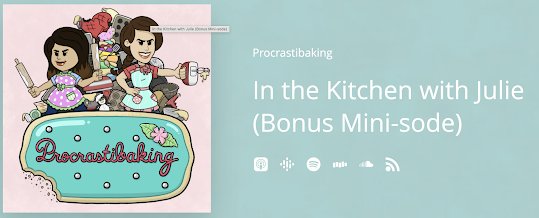
Procrastibaking: In the Kitchen with Julie (in Partnership with Literacy Connections)
Enjoy our first Thanksgiving special celebrating Literacy Connections and all things cookbook! https://www.procrastibakingpodcast.com/podcas...
-
Original Post Date: March 2021 Excerpt Credit To: https://ideas.ted.com/how-literature-yes-literature-can-help-you-better-connect-with-other...
-
Enjoy our first Thanksgiving special celebrating Literacy Connections and all things cookbook! https://www.procrastibakingpodcast.com/podcas...